Pick the places that matter
Choose relevant locations and agree on a reference test.
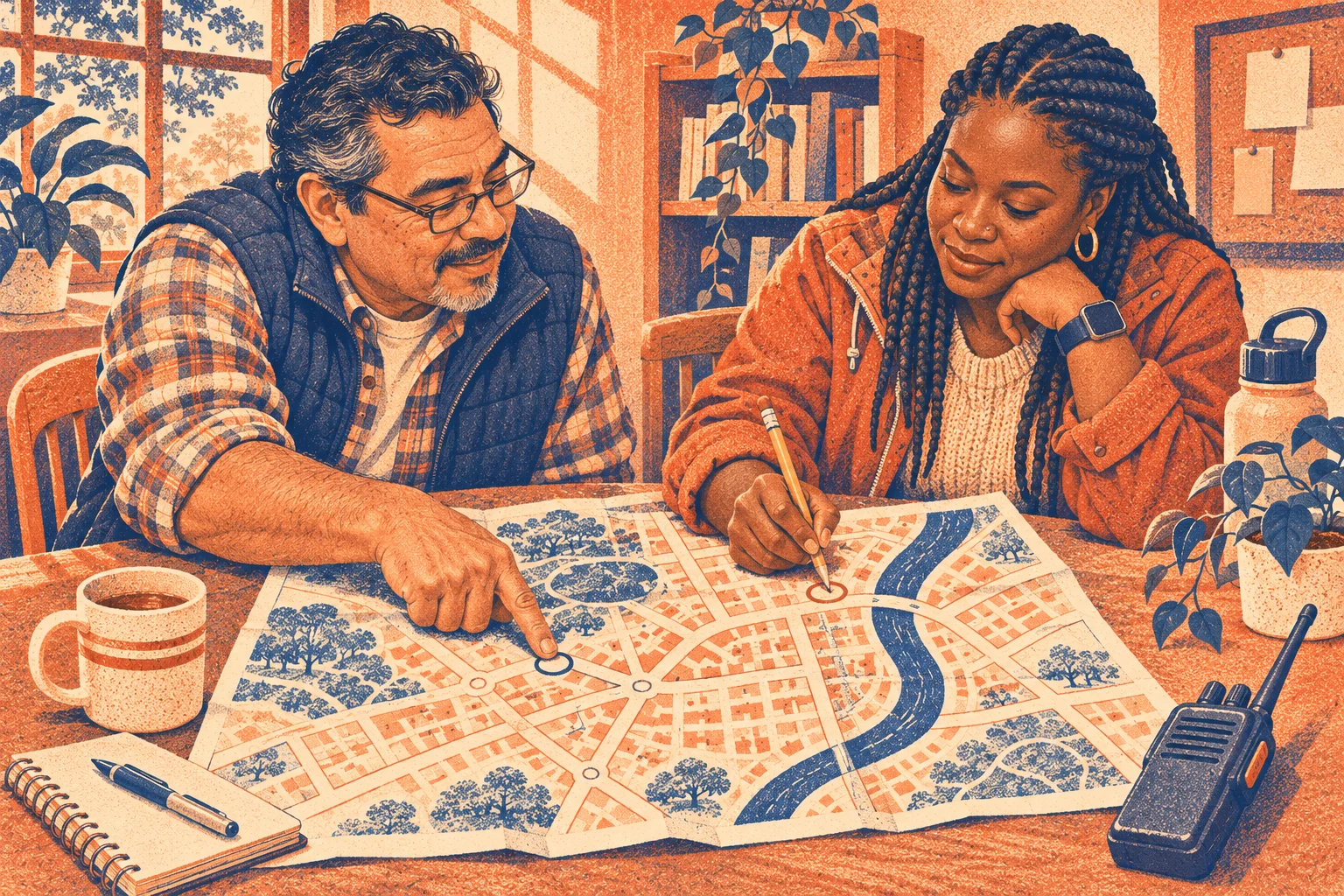
A range estimate can tell you where to start. A coverage map tells your group whether the kitchen can reach the community hall, and where someone could stand to relay a call. Begin with the locations that already have jobs in your plan.
Put the endpoints on paper
Mark net control and three places that need to reach it. Include an indoor location, a normal outdoor operating position, and the spot you’re least confident about. Give each point a short public label such as “Hall west door” or “Cedar stop.” On a shared copy, use labels that participants can recognize without publishing private addresses. Use only places where your group has safe, permitted access.
Decide what counts as contact
Pick one radio service, a clear authorized direct channel, and a short message with two details to copy. Keep the same settings and use the radios people will actually carry. Ask each station to repeat the details. Mark “one way” if only one person can copy them. That result matters even when the signal meter is high. Choose a radio service · What to put on the air
Transmit
Draw the four points and mark the order in which you’ll test them. Do a short reference check with two stations in known good positions. Record the channel, mode, power, antenna, time, and what each station copied. Use those settings at the endpoints in Part 2.