FRS and MURS without an individual license
Choose a direct voice service and test where it works.
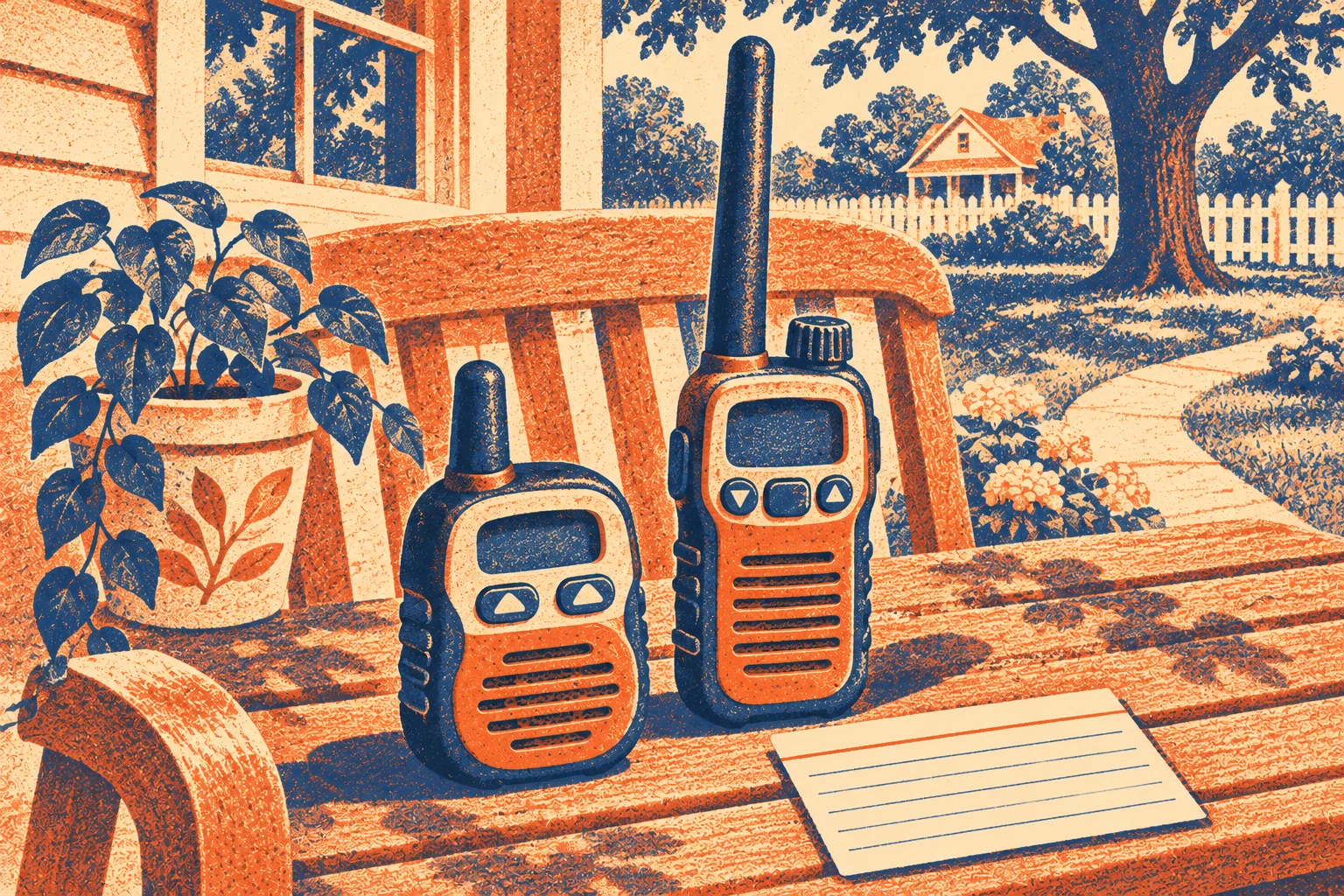
Two families at a campground want to check in from different campsites. Three neighbors want to cover a block during a power outage. In both cases, the first question is whether everyone can use the same radio service and hear each other from the places they’ll be. In the United States, eligible operators can use the Family Radio Service (FRS) or the Multi-Use Radio Service (MURS) without an individual FCC license. Choose radios certified for the service you intend to use. FCC authorization rule · FCC equipment certification rule
Where each service fits
FRS is a good fit for a campground, a family outing, or a short check-in between neighbors who already have matching walkie-talkies. If a licensed GMRS operator joins the check-in, the two services can exchange voice on a shared direct channel. Agree on the channel number, start with tone filtering off, and test both directions. FCC FRS permissible uses · FRS and GMRS check-in guide
MURS is another option for direct voice. It can suit a property, a trailhead and nearby parking area, or a neighborhood that already has MURS radios. MURS uses VHF frequencies, separate from the UHF channels used by FRS and GMRS. Everyone using that path needs access to a MURS radio. Write down the frequency alongside the channel label on each radio. FCC MURS channels
Know the limits
- FRS: 22 shared UHF channels. The radio uses an integral antenna. Effective radiated power is capped at 0.5 watt on channels 8–14 and 2 watts on channels 1–7 and 15–22. Plan for direct voice between stations. FCC FRS technical rules
- MURS: Five shared VHF frequencies at 151.820, 151.880, 151.940, 154.570 and 154.600 MHz. Transmitter output is limited to 2 watts. The rules prohibit repeater stations and signal boosters. FCC MURS technical rules
Walls, terrain and the position of the person holding the radio affect the path. A successful check from the sidewalk tells you little about the same call from a basement. Both services use shared channels. Listen before transmitting, and remember that a tone or “privacy code” only filters what comes out of the speaker. Other people can still hear your voice.
Transmit
Put two people at the farthest points they’d need to reach. Use the agreed direct channel and exchange a location and next check-in time. Ask for a read-back, then reverse roles. Try again from inside the buildings you’d actually use. If the direct path fails, test a human relay or record a different backup. Put the channel, frequency, and switch time on the printed plan.
If your group needs a repeater, continue with how to get a GMRS license.