Set up and practice a simple radio check-in
Set two direct channels and practice what happens when a reply is missed.
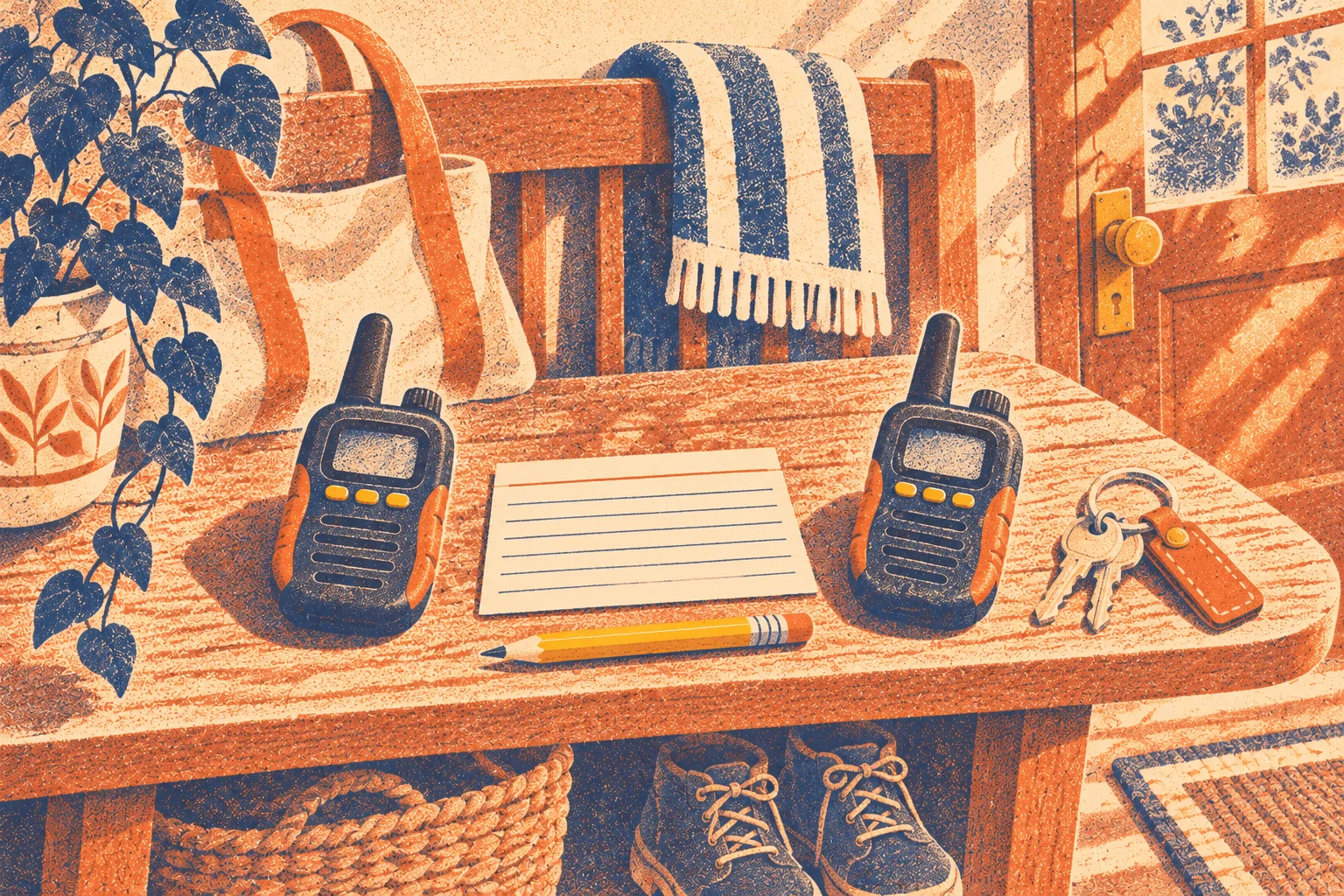
At six o’clock, one person is home and another is at the neighborhood meeting spot. Can they reach each other, confirm what they heard, and agree on what to do next? Try that with two handheld radios on an ordinary afternoon. Once the check-in works, put the settings and the fallback on a card each person can keep with their radio.
Equipment for this guide
I may earn a commission from purchases made through the BTECH links in this section.
- BTECH FRS-A1 two-pack — Two FRS handhelds for direct check-ins on the 22 standard channels.
- BTECH GMRS-V2 handheld — A GMRS handheld with direct and repeater channels for authorized operators.
Choose the radios and channels
For a first practice, two Family Radio Service (FRS) handhelds are enough. In the U.S., eligible users can operate certified FRS radios without applying for an individual FCC license. General Mobile Radio Service (GMRS) requires a certified GMRS radio and a license. A license holder can authorize eligible immediate family members to use their GMRS stations. A neighbor outside that family can join the exercise on an FRS handheld or transmit under their own GMRS authorization. FCC authorization rules · FRS certification · GMRS certification · GMRS licensing
FRS and GMRS handhelds can talk directly on shared channels. If you’re mixing the two, select a shared channel in direct (simplex) mode on the GMRS radio. For the first practice, turn off any setting labeled privacy code, CTCSS, or DCS on both radios. These settings can mute what comes through your speaker. Other people on the channel can still hear what you say. Shared FRS channels · Permitted GMRS communication with FRS
With the BTECH FRS-A1, select the channel with ▲/▼ and set RXCODE (menu 01) and TXCODE (menu 02) to OFF on both channels you plan to use. With the BTECH GMRS-V2, use the matching direct channel from 1–22 for this drill. FRS-A1 manual · GMRS-V2 manual
Choose a primary and a backup channel that sound clear where you’ll use them. Write down both in advance. If you hear other people talking at check-in time, leave them room to finish or use the agreed backup at the agreed time. Keep personal details off the air. FCC rules on sharing channels
On the card
Here’s a sample for two households. Change the times, channels, and locations to fit your plan.
| What to agree on | Example |
|---|---|
| Who starts | Alex calls Sam. Sam listens and confirms. |
| Where to listen | Alex at the front porch and Sam at the meeting spot. |
| Primary and backup | Direct channel 4 first, then direct channel 6. Codes off on both. |
| Check-in window | At 6:00 p.m., Alex calls and retries once at 6:01 if there’s no reply. |
| When to switch | If there’s still no contact, both switch to the backup at 6:02 p.m. and listen through 6:04. Alex calls first. |
| If neither channel works | Try a text after 6:04. If it doesn’t go through, follow the household’s agreed stay-put or safe meeting instructions. |
If more households join, give one person the job of calling each household in turn. That keeps several people from pressing the talk button at once. Write down who answered and who still needs a follow-up.
Tx/Rx
Listen before you talk. Hold the push-to-talk button, pause briefly, and speak in a normal voice. Release the button to listen. Say who you’re calling, where you are, how you’re doing, and what you’ll do next.
Alex: “Sam, this is Alex. I’m at the front porch. I’m OK. I’ll stay here and check in again at 6:15.”
Sam: “Alex, this is Sam. Got it. You’re staying at the porch. I’ll listen again at 6:15.”
If you use GMRS, include your assigned FCC call sign at the end of your transmission or series of transmissions. During a series that lasts longer than 15 minutes, identify at the 15-minute mark and at least every 15 minutes after that. The names in the example help people know who’s talking. On GMRS, use them alongside the required identification. GMRS station identification rule
Mode Change
If a reply is missed, follow the clock on the card. Both people need to switch to the same backup channel at the same time. If you can hear each other outside but lose contact indoors, try the porch or another safe spot and record where the radio worked in both directions. Hearing someone once tells you only that the signal made it one way.
Transmit
- Start close. Tell everyone it’s a drill. Charge the radios, set the same primary channel with codes off, and try one check-in each way.
- Use your real locations. Repeat from the places on the card, such as two homes or a home and the meeting spot. Have the listener repeat the sender’s location and next check-in time.
- Practice a missed reply. Have the listener deliberately skip the reply on the primary. Both follow the retry and switch times on the card, then complete the exchange on the backup.
- Write down what worked. Record which locations worked both ways. Ask each person what they’ll do if neither channel works. Update the card wherever the answers differ.
The drill is complete when everyone can find the settings, send and confirm a check-in, and switch channels or use the fallback without a reminder.