Choose a safe antenna location
Identify safe operating positions and record a baseline.
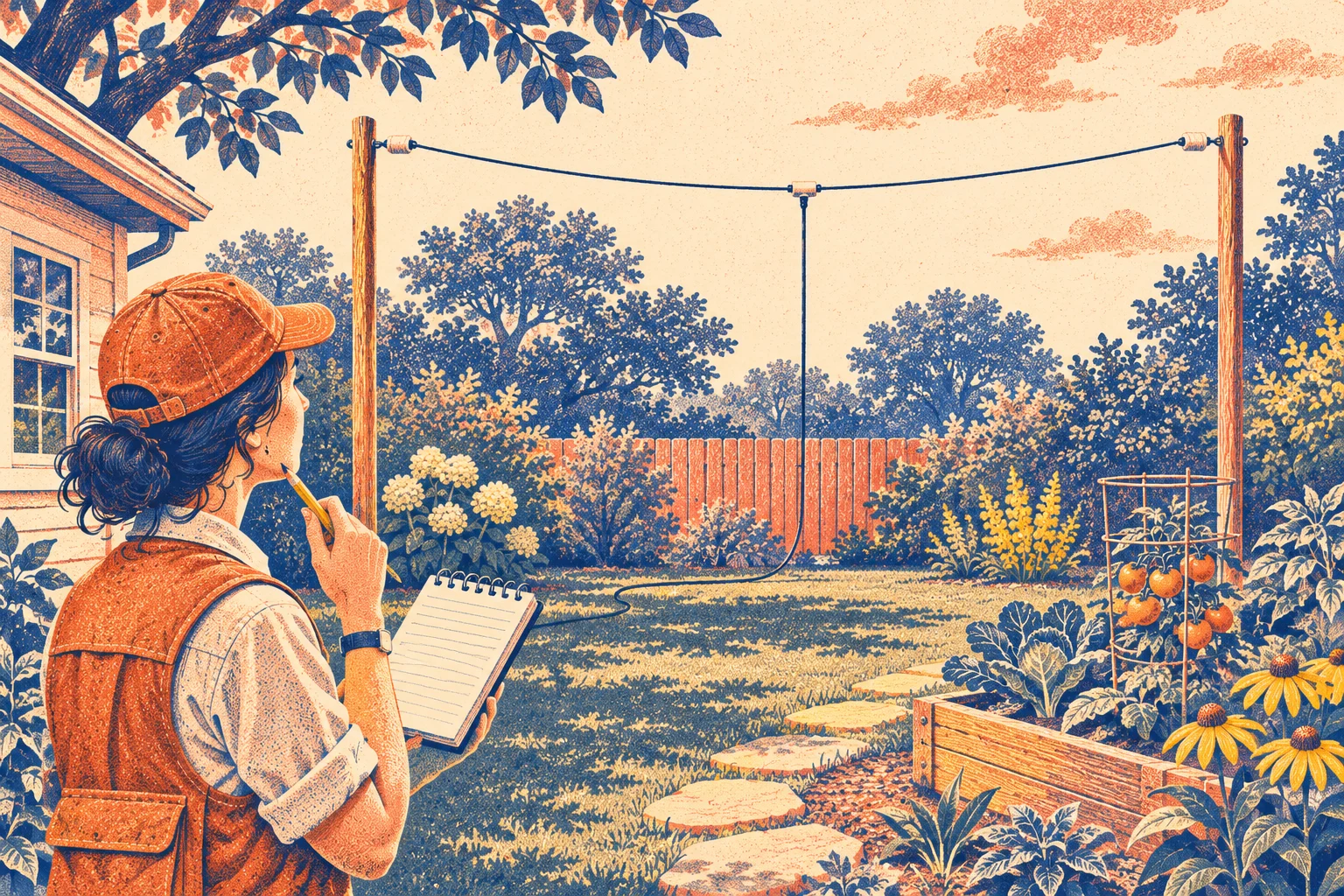
Start by putting the intended remote station on a map. For a neighborhood VHF or UHF path, the spot from which you transmit can matter as much as the antenna. For a regional HF path, consider the band, propagation, and the kind of wire you can support. Pick a location you can use and repeat safely. Where HF fits in a regional plan
Walk the site before you raise anything
Look for overhead lines and places a falling support, loose wire, or feed line could reach them. Choose another location if you cannot keep the installation clear. Check who can access the site, where people walk, how you’ll secure a temporary support, and whether a cable would cross a doorway or path. For a fixed station, plan the cable entry, grounding, and lightning protection before installing. Get help from an experienced installer when needed. ARRL antenna and tower safety
Make a baseline
Use the current station to see how well you can reach the other operator. Try a different safe operating position before adding equipment. For an FRS handheld, moving the entire radio is the test because the antenna is integral. For an amateur station, account for exposure where people can stand, using your actual frequency, power, duty cycle, and antenna. FCC FRS antenna rule · FCC amateur station location and exposure rules · ARRL RF exposure calculator
Transmit
Mark two safe candidate locations on a sketch. From each one, exchange the same short message with a partner if both stations can transmit on the agreed path. Log location, time, settings, and whether each side copied the full message. Keep those results as your baseline.