Find where direct coverage drops out
Find where a direct radio path works from safe stopping points.
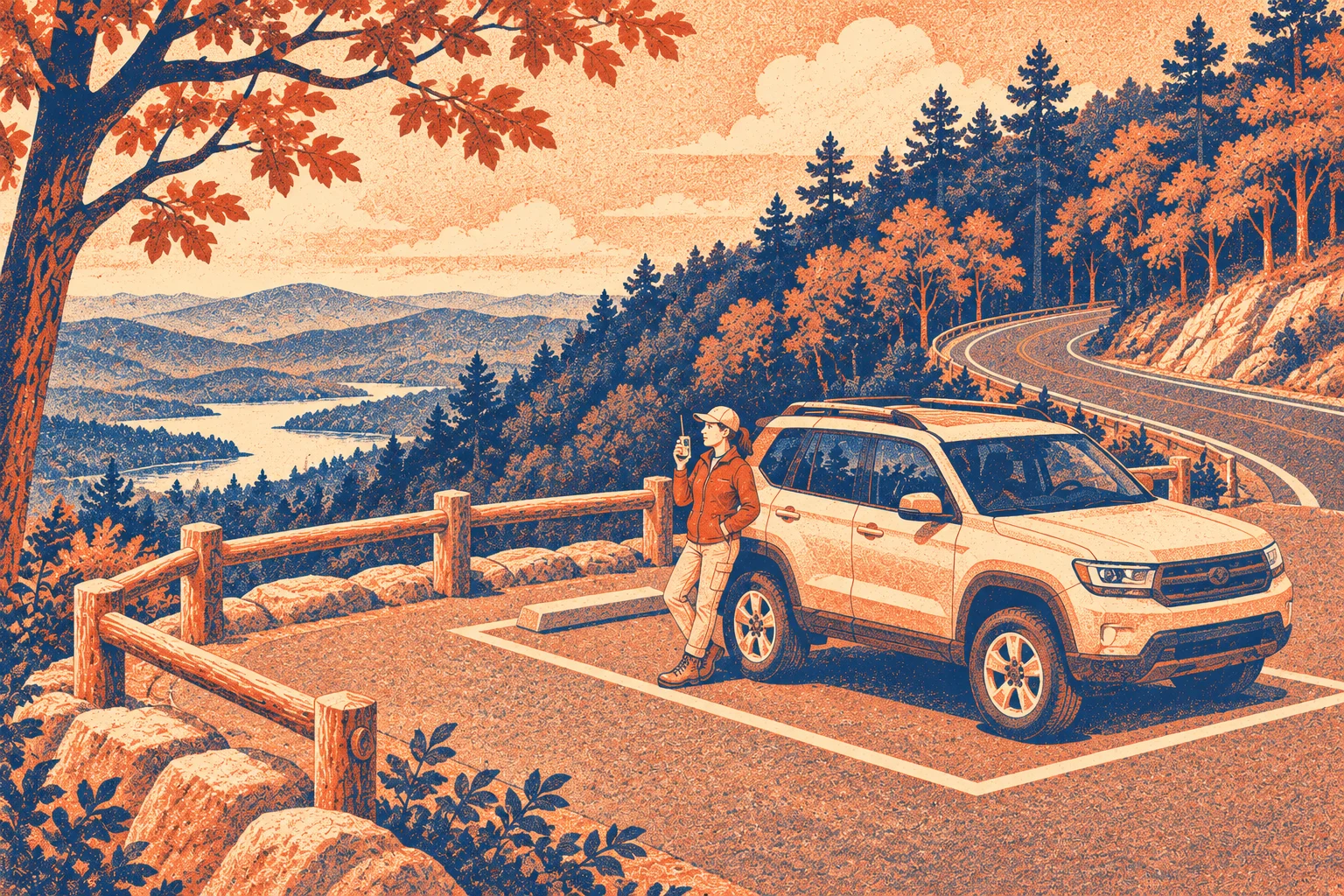
A channel that works across an open valley may go quiet after one vehicle rounds a ridge. Make a simple coverage note for trips you repeat. A tested pullout or rest area can be a better check-in point than an untested mile marker.
Test from places you can stop safely
Pick a short route with three legal, safe parking points. Hold one station at an agreed location while the other tests the stops. Use a passenger to monitor during travel or wait to operate until parked. Keep the service, channel, antennas, and power the same so the locations are what change. Use the same short message each time and confirm that each end can copy it. NHTSA guidance on reducing driver distractions · Test handheld range and relay
For each stop, record direction of travel or access details, approximate time, and whether the call worked both ways. If you try a repeater, confirm access, test from both ends, and keep a direct or non-radio fallback. Check it on another day before relying on it. Add a local GMRS repeater
Transmit
Test one open location and one behind terrain or buildings. Log the result from each end. Put the most reliable safe stop on the card. If neither works, agree to check in from the next tested location or use the alternate contact method.