Set up your first HF station
Set up a radio, antenna, and power source, then listen to a net.
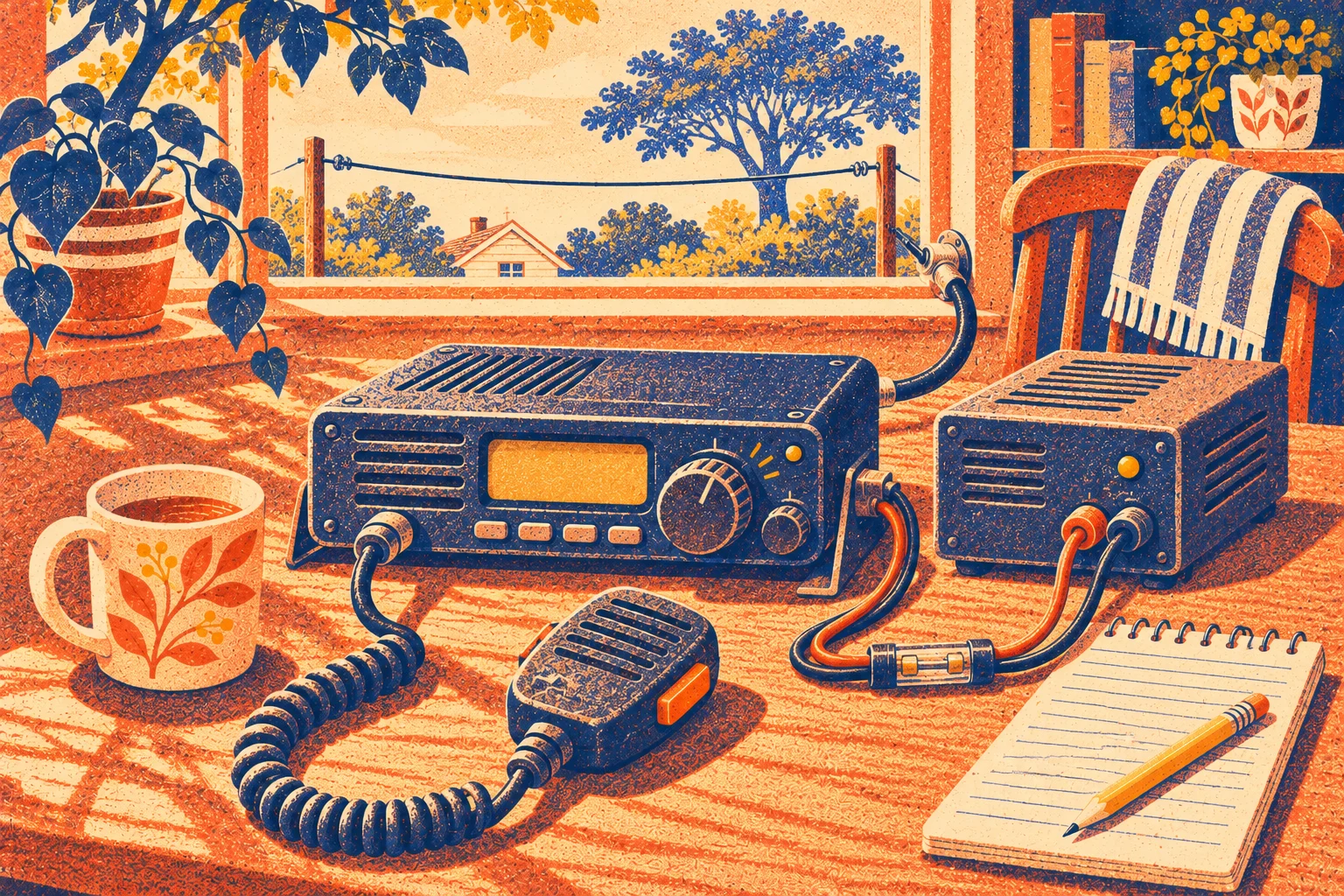
Pine Ridge needs a station that can hear Cedar Valley at the scheduled check-in. Start with the intended path and the bands the two operators can use. A modest station and a wire you can put up again after moving are enough to begin testing.
Put the station together
| Part | What to check |
|---|---|
| HF transceiver | It covers your planned bands and supports SSB voice. Check the manual for its power and antenna connections. |
| Power | Use a regulated DC supply or battery that can deliver the radio’s current on transmit. Use the manufacturer’s fuse and wiring guidance. |
| Antenna and feed line | Start with a dipole or inverted V for a band you plan to use. A linked or fan dipole is an option if you want to test both 40 and 80 meters. Use feed line and connectors that fit the radio and antenna. |
| Station log | Keep the schedule, the other station’s call sign, the expected fallback, and space to write signal reports. |
Place the wire and supports well clear of power lines. For a permanent installation, plan for grounding, lightning protection, and RF exposure before transmitting. Check the antenna with an analyzer or the radio’s SWR meter as directed by the manufacturer. If SWR is high, check the antenna, feed line, and connectors before increasing power. Use the minimum power needed for the contact. ARRL antenna safety guidance · FCC RF exposure rules for amateurs · FCC transmitter power rule
Start by listening
- Find a local club’s published HF net schedule or ask another operator for a scheduled listening test. Confirm the time zone, frequency, and sideband.
- Tune to the listed frequency and select the stated mode. For conventional SSB voice, 40 and 80 meters normally use lower sideband. Confirm the setting with the net or your partner.
- Adjust audio and filtering so speech is easy to copy. Write down which stations you heard, where they were, and whether you heard both sides of an exchange.
- If the receiver is noisy, check for nearby chargers, lighting, or other electronics you can safely switch off for comparison. Log the change. Repeat at your planned check-in time.
Transmit
Arrange a short contact with a licensed partner on a frequency and mode both operators may use. Listen first and ask if the frequency is in use. Make a brief call and exchange call signs and signal reports. Try the planned alternate band at the agreed time. If one end hears the other poorly, record which direction failed and change one thing at a time before retesting. FCC good operating practice · FCC station identification