Assign the operators, relays, and log keeper
Decide who operates, relays, keeps the log, and acts on requests.
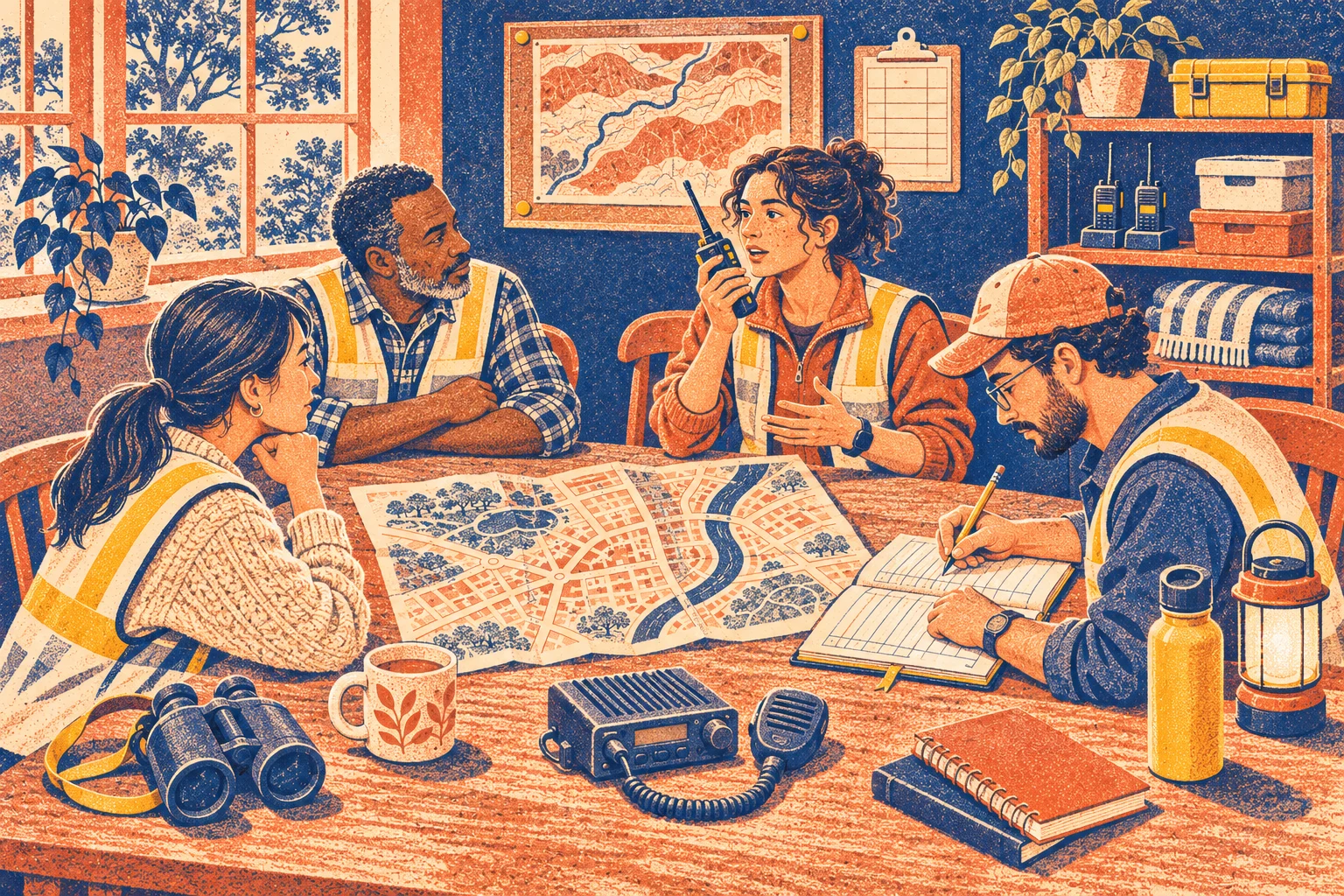
A strong signal helps a message get heard. A team still has to decide who takes the message, who forwards it, and who makes sure the answer reaches the sender. Give each task a name and a backup before the next exercise.
Write down who does what
| Role | Job |
|---|---|
| Net control | Opens and closes the net, calls for check-ins, and assigns relays. |
| Neighborhood operator | Collects local reports, confirms important details, and passes them to the net. |
| Relay | Repeats the original request and returns the destination’s answer. |
| Log keeper | Records stations heard, message numbers, actions, and requests still open. |
A small group can combine roles. Keep a named backup for each role that would stop the net if it went unfilled. Also name the person who can accept or act on a request. A radio operator can confirm that a request was delivered even if a different person must approve the action. How to run a community radio net
Prepare a handoff card
Give each operator the schedule, planned channel or frequency, switch time, and contact for the next role. Agree on a short message format and practice distinguishing copied, accepted, and completed. Keep the log where the backup can find it. For an amateur net, make sure every station has an authorized control operator for the frequency and mode. U.S. radio licensing
Transmit
Have four volunteers assign roles and simulate one request. Halfway through, ask the log keeper to leave the table. The backup should find the open request and identify who owes a reply without asking the sender to start over. The message that survived three handoffs