ARES: Where community radio meets organized service
Meet your local group, learn its assignments, and practice delivering a message with a clear status.
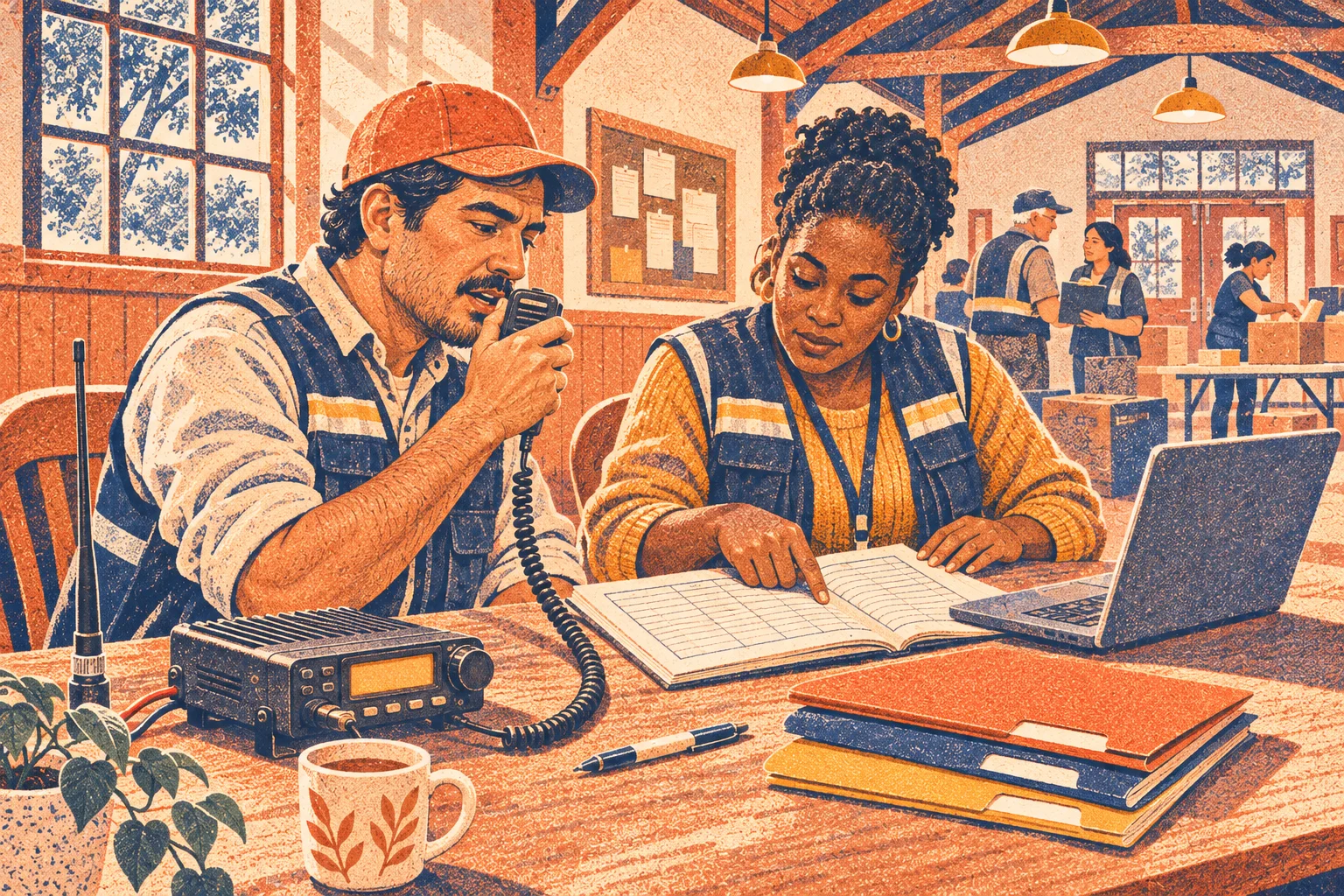
Your neighborhood check-in works, but the wider community also needs organized communications support. A volunteer at the hall has a message for a partner organization. Who accepts the assignment, chooses the operating position, and confirms delivery? Those relationships are worth building before an outage.
The Amateur Radio Emergency Service, or ARES, is one way licensed amateurs prepare to provide communications in public service. Begin by learning what your local group actually does.
What ARES is
ARRL describes ARES as licensed amateurs who voluntarily register their qualifications and equipment with local ARES leadership for public-service communications duty. You do not have to belong to ARRL or a radio club to apply. Local training and participation requirements still matter. ARRL ARES overview and registration
ARES is a practical place to develop message handling, station operation, and teamwork with people who train together. Equipment and assignments follow local needs. Owning a high-power station or a large collection of radios is not a substitute for being able to complete the assigned job.
The Emergency Coordinator, or EC, leads the local ARES group and works with community partners on plans, training, and participation. Ask the EC which organizations the group supports and which activities are open to a newcomer. ARRL Emergency Coordinator responsibilities
Start with a conversation
Use ARRL's ARES page to find local leadership, or ask a nearby amateur club for the appropriate contact. Attend an introductory meeting or observe a scheduled net with permission. Confirm the net's current frequency, mode, time zone, and check-in procedure before transmitting.
Hello, I'm [name and call sign] in [area]. I'm interested in learning how our local ARES group supports community organizations. What is a good first meeting or net, what training do you expect, and how can a new member practice a useful assignment?
If you are not licensed yet, ask what public information sessions you can attend and use the amateur licensing guide. CERT or other community volunteer opportunities may offer a useful starting point while you study. CERT and communications
Learn the assignment before packing
Ask these questions during orientation, then keep the answers with your plan.
| Ask | Why it matters |
|---|---|
| Who activates us, and how do we acknowledge? | You need an actual assignment and a way to say whether you are available |
| Which training and credentials are required? | Requirements vary by role and partner organization |
| Which radios, modes, and forms do we use? | Your station and message format must fit the assignment |
| Who is the supervisor and reporting destination? | Messages need a defined route and an accountable recipient |
| How do relief, check-out, and return home work? | The coordinator needs to account for people and unfinished traffic |
| What happens when the primary path fails? | The backup must reach someone who is expecting it |
Use the group's training plan and task book with its leadership. Learn which FEMA incident-management courses or other training your local role requires. An online course or a completed task-book item does not itself create an activation or agency credential. ARES training resources
Prepare your household before volunteering away from home. Be candid about your availability, transport, skills, equipment, and any support you need. Declining an assignment you cannot safely complete is useful information for the coordinator.
Make the first job small and complete
A good practice task might be receiving one written exercise message, checking its address and requested action, transmitting it in the prescribed format, and logging its delivery status. Distinguish received at the radio position from delivered to the intended person, and distinguish both from action accepted.
Read back critical details. Record the time and time zone, originator, destination, message identifier, and who owns any follow-up. Ask rather than improvising a missing address or changing the sender's wording. Three handoffs · Verify what you hear
Connect groups through agreed roles
A local ARES group may have arrangements with government or nonprofit partners. Ask what those arrangements cover. Membership does not authorize independent access to a facility or use of its radio system. Follow your assigned role and the partner's procedures. How local ARES leadership establishes partnerships
A neighborhood group can supply a useful report through an agreed contact. A CERT team may have its own reporting chain. Avoid telling neighbors that “ARES will handle it” unless the local leadership has accepted that role and the path has been practiced. Community assistance groups · County emergency management
Transmit
With an instructor or willing authorized partner, handle one clearly labeled exercise message from originator to intended recipient. Have the recipient confirm the essential details. Log whether it was received, delivered, or awaiting action. Then practice a relief handoff so another operator can explain the message's current status. Ask the local EC which part of that exercise matches the group's real procedures and what you should learn next.